
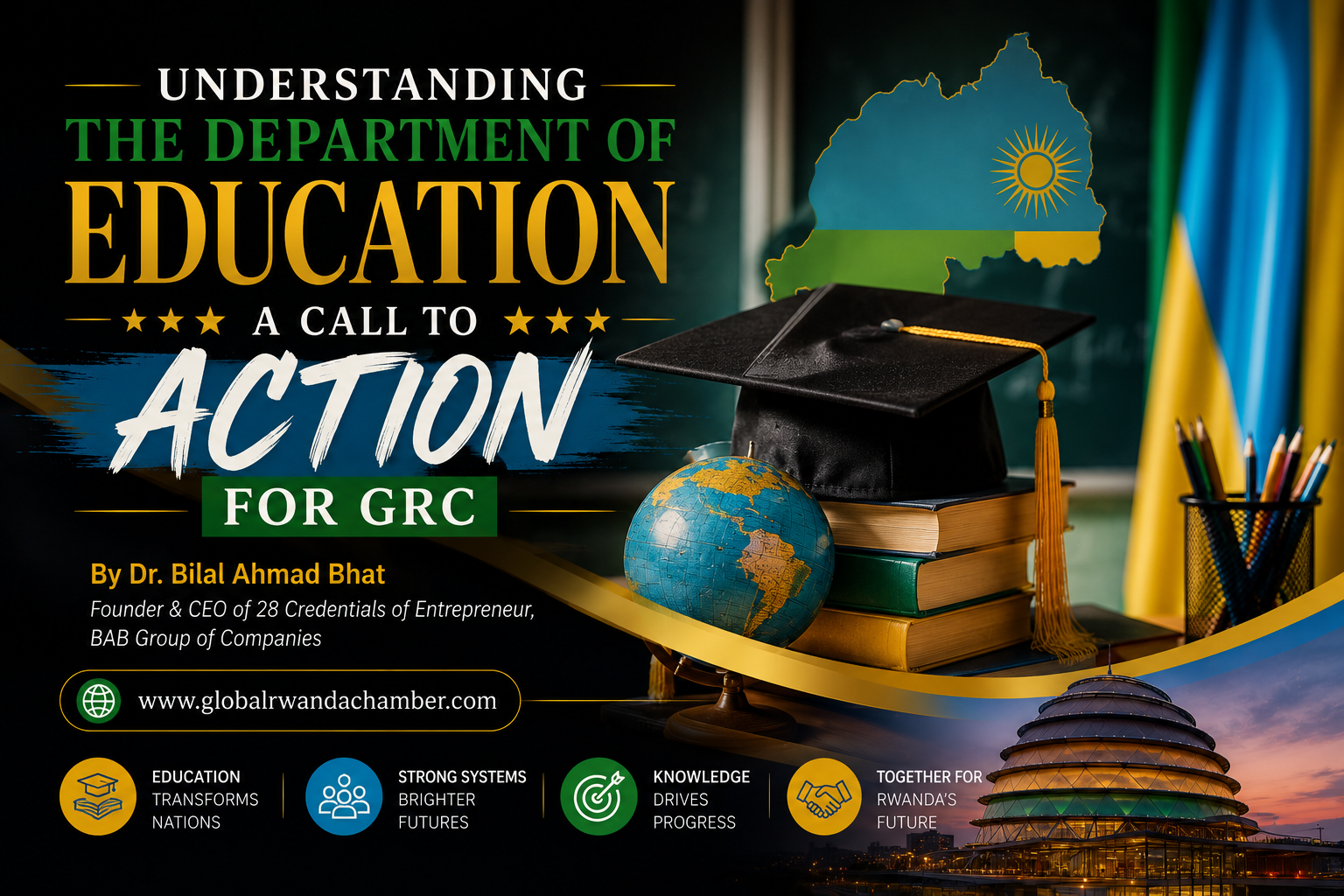
Understanding the Department of Education: A Call to Action for GRC
Education is not just a system. It is the foundation of every nation’s future, economic strength, and social stability. Yet across many regions, the Department of Education stands at a critical crossroads where decisions made today will define generations tomorrow.
This is not a routine policy discussion. It is a wake-up call.
Governance, Responsibility, and Compliance (GRC) in education is no longer optional. It is a necessity. When accountability weakens, systems collapse silently—not overnight, but through years of unnoticed decline in quality, equity, and opportunity.
The Department of Education must evolve beyond administration. It must become a driving force of transformation.
Why This Moment Matters More Than Ever
We are living in a time where:
- Students are competing in a global economy, not a local classroom
- Technology is reshaping how knowledge is delivered and absorbed
- Inequality in education access is widening instead of closing
- Institutions are under pressure to prove transparency and results
If the education system fails to adapt, it does not just affect students. It affects national progress, workforce readiness, and long-term innovation capacity.
This is why GRC integration into education governance is urgent. Without structured accountability, even the most well-funded systems risk inefficiency and stagnation.
The Hidden Crisis Within Education Systems
Behind official reports and policy frameworks lies a deeper challenge:
- Outdated curricula not aligned with real-world skills
- Lack of measurable accountability in school performance
- Weak communication between policymakers and educators
- Insufficient monitoring of educational outcomes
- Growing disconnect between education systems and industry needs
These are not small gaps. They are systemic cracks that grow wider each year.
And the most concerning part? They often go unnoticed until they become irreversible.
GRC as the Turning Point for Educational Reform
Governance, Risk, and Compliance in education is not bureaucracy. It is protection.
When implemented effectively, GRC ensures:
- Transparent decision-making at every level
- Risk identification before failures occur
- Consistent compliance with educational standards
- Data-driven policy formation
- Accountability across institutions and administrators
This is how education systems move from reactive to proactive leadership.
Without GRC, reforms remain theoretical. With GRC, they become measurable and enforceable.
A Call to Action for Leaders and Institutions
This is a defining moment for policymakers, educators, and institutional leaders.
The question is no longer whether reform is needed. The question is whether we have the courage to implement it at scale.
Immediate priorities must include:
- Strengthening oversight mechanisms in education departments
- Integrating real-time performance tracking systems
- Updating curricula to reflect future skills and industries
- Ensuring transparency in funding and resource allocation
- Building collaboration between governments, educators, and private sectors
Delay is not neutral. Delay is cost.
Every year of inaction widens the gap between potential and performance.
The Future We Must Build Now
The Department of Education must transition from traditional administration to intelligent governance.
A future-ready system is one where:
- Every student’s progress is measurable and supported
- Every institution is accountable for outcomes
- Every policy is backed by data, not assumption
- Every decision strengthens national capability
This is not idealism. This is necessity.
Education is the only infrastructure that determines the quality of every other infrastructure.
Conclusion: The Responsibility We Cannot Postpone
Reforming education through GRC is not just an administrative upgrade. It is a national responsibility.
The cost of inaction is not theoretical. It is visible in unemployment rates, skill gaps, and declining competitiveness.
The opportunity is equally real. With the right governance framework, education can become the strongest driver of economic transformation and social equity.
The time to act is now.