
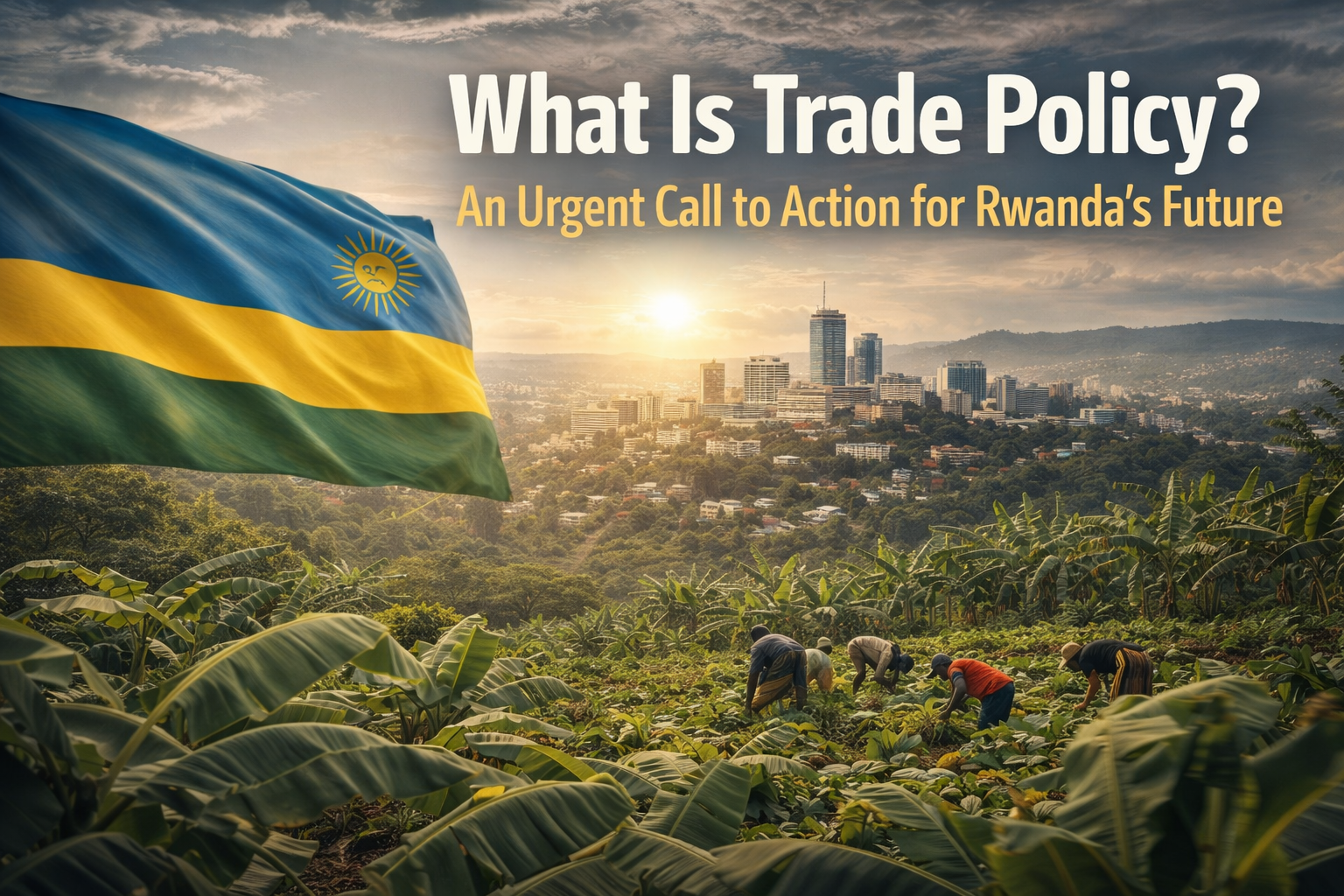
Trade policy is not just a government framework written in economic textbooks. It is the silent engine that determines whether a nation rises into prosperity or struggles in dependency. For Rwanda, a country known for its resilience, rapid transformation, and ambitious development goals, trade policy is not a technical subject reserved for economists. It is a national survival strategy, a roadmap for opportunity, and a powerful tool that shapes the daily life of every citizen.
At its core, trade policy refers to the rules, regulations, agreements, and strategies a country uses to control how goods and services move across its borders. It determines what is imported, what is exported, how tariffs are applied, and how local industries are protected or exposed to global competition. But beyond definitions, trade policy is about power, opportunity, and positioning in the global economy.
For Rwanda, this subject carries urgency. The global economy is shifting rapidly. Supply chains are evolving, digital trade is expanding, and competition among emerging economies is intensifying. In this environment, a strong and intelligent trade policy is not optional. It is essential.
Understanding Trade Policy in Simple Terms
Trade policy can be understood as the rules of engagement between a country and the rest of the world in commerce.
It includes:
- Import policies that regulate goods entering the country
- Export strategies that promote local products abroad
- Tariff systems that control pricing and competitiveness
- Trade agreements that open or restrict market access
- Non-tariff barriers like standards, licenses, and quotas
These elements together decide whether local businesses grow or struggle, whether farmers expand into international markets, and whether industries become globally competitive or remain locally limited.
For Rwanda, trade policy is deeply connected to its vision of becoming a middle-income, knowledge-based economy. It is directly tied to agriculture, manufacturing, digital services, tourism, and regional integration.
Why Trade Policy Matters for Rwanda’s Growth
Rwanda is a landlocked country, but not a land-limited one. Its ambition is regional leadership in East Africa and beyond. Trade policy is one of the strongest tools it has to overcome geographic limitations.
A strong trade policy can:
- Reduce the cost of importing essential goods and technology
- Expand export markets for coffee, tea, minerals, and services
- Strengthen local industries against unfair global competition
- Attract foreign investment through stable trade rules
- Integrate Rwanda more deeply into African and global markets
Without a clear and strategic trade policy, even strong economic sectors can become vulnerable to global price fluctuations, dependency on imports, and missed opportunities in international markets.
This is why trade policy is not just a government document. It is a national growth blueprint.
The Hidden Power of Trade Policy
Many people underestimate trade policy because it does not appear directly in daily life. However, its effects are everywhere.
When the price of imported fuel changes, it is trade policy.
When local farmers struggle to export produce due to regulations, it is trade policy.
When new factories open because tariffs are favorable, it is trade policy.
When foreign investors choose Rwanda over another country, it is often because of trade agreements and stability in trade rules.
Trade policy silently determines:
- Job creation
- Inflation levels
- Business competitiveness
- Food security
- Industrial growth
For Rwanda’s youth population, this becomes even more critical. Every trade decision affects employment opportunities and entrepreneurship pathways.
Rwanda’s Strategic Position in Global Trade
Rwanda has positioned itself as a reform-driven economy in Africa. Through regional cooperation and global partnerships, it is actively integrating into broader markets.
Key strategic areas include:
- Membership in regional trade blocs that expand market access
- Investment in infrastructure to support logistics and exports
- Promotion of digital trade and innovation-based exports
- Support for value-added industries rather than raw exports
However, global trade is highly competitive. Countries that fail to continuously upgrade their trade policies risk being left behind.
Rwanda’s challenge is not only to participate in trade, but to negotiate better value, stronger partnerships, and sustainable economic independence.
The Urgency: Why Rwanda Must Act Now
The global economy is not waiting.
Artificial intelligence is transforming services trade. Climate change is reshaping agricultural exports. Geopolitical tensions are altering supply chains. Countries are increasingly prioritizing domestic production over imports.
In this environment, Rwanda must urgently focus on:
- Strengthening export diversification beyond traditional goods
- Building competitive manufacturing capacity
- Expanding digital economy exports such as IT services and fintech
- Reducing dependency on imported essentials
- Negotiating stronger and more beneficial trade agreements
Delay in trade policy modernization is not neutral. It is costly. It means lost investment, lost jobs, and lost competitiveness.
Challenges Facing Trade Policy Implementation
Despite progress, several challenges remain:
- Over-reliance on limited export products
- High transportation and logistics costs due to geography
- Limited industrial diversification
- Global market volatility
- Non-tariff barriers in international markets
These challenges require not just policy creation but effective execution, private sector involvement, and continuous reform.
Trade policy must evolve from being theoretical to becoming deeply practical and results-driven.
The Role of Businesses and Citizens
Trade policy is not only the responsibility of the government. Businesses, entrepreneurs, and citizens play a critical role.
Businesses must:
- Improve product quality to meet global standards
- Invest in innovation and branding
- Explore international markets aggressively
- Adapt to changing trade regulations
Citizens, especially young entrepreneurs, must:
- Understand global market opportunities
- Develop export-oriented mindsets
- Learn skills aligned with international demand
- Engage in value creation rather than only consumption
A nation’s trade strength is ultimately built on the readiness of its people.
A Vision for Rwanda’s Trade Future
A strong trade policy for Rwanda should aim to create:
- A diversified export economy
- A competitive manufacturing base
- A thriving digital export sector
- Strong regional trade leadership
- Sustainable and inclusive economic growth
The future belongs to countries that understand trade not as a transaction, but as transformation.
Rwanda has already shown the world that rapid change is possible. The next step is ensuring that trade policy becomes a powerful accelerator of that transformation.
Final Call to Action
Trade policy is not a background issue. It is the front line of economic survival and growth. Rwanda stands at a critical moment where decisions made today will define the next generation’s opportunities.
This is the time to act, not observe. To innovate, not imitate. To lead, not follow.
The urgency is real. The opportunity is massive. The direction chosen today will shape Rwanda’s place in the global economy for decades to come.