
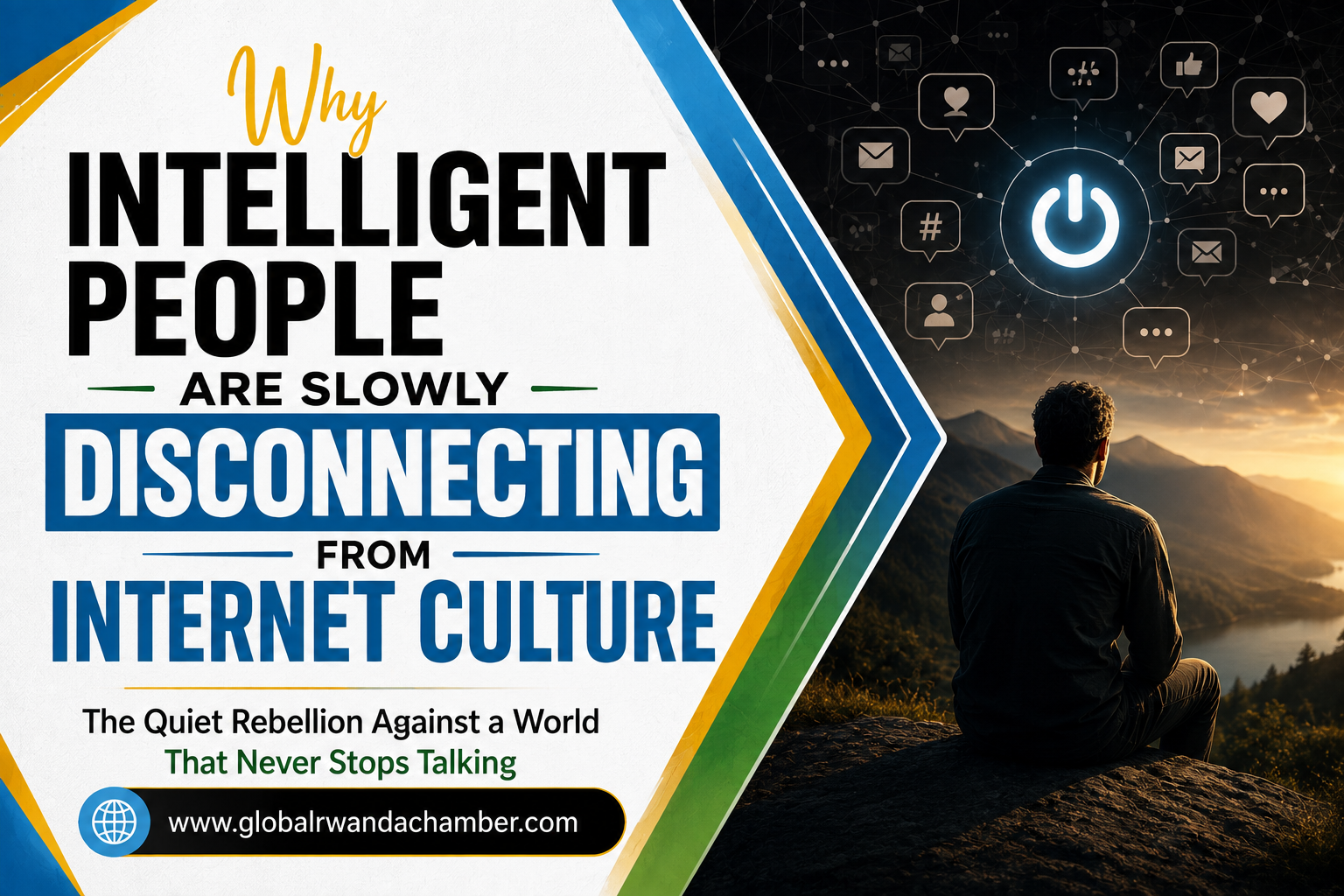
1. The internet was supposed to connect us. So why are so many people quietly walking away?
The internet promised connection, knowledge, opportunity, and freedom. It gave ordinary people access to information once reserved for universities, libraries, corporations, and powerful institutions. Yet something unexpected is happening. Increasingly, thoughtful and intellectually curious people are becoming more selective about how they participate in internet culture. They are not necessarily deleting every social media account or abandoning technology completely. Instead, they are stepping away from the noise, outrage, endless commentary, manufactured controversy, and pressure to constantly perform online. They are beginning to realize that being connected to everything does not necessarily mean being connected to what matters.
2. When attention becomes the product, your mind becomes the marketplace
Modern internet culture is built around attention. Every notification, recommendation, headline, short video, argument, and trending topic competes for a small piece of your mental space. The most valuable content is not always the most meaningful content. Often, it is the content that creates the strongest emotional reaction. Anger gets clicks. Fear gets shares. Controversy gets comments. Outrage keeps people returning. Intelligent people are increasingly recognizing this mechanism and asking an uncomfortable question: If a platform profits from keeping me emotionally stimulated, am I really choosing what deserves my attention? That question can fundamentally change the way a person uses the internet.
3. Intelligent people are learning that constant information is not the same as knowledge
We live in an age where information is almost limitless. But information without reflection can become another form of confusion. A person can consume hundreds of headlines every day and still understand very little about the world. They can watch dozens of educational videos without developing expertise. They can follow experts without ever thinking independently. The deeper problem is not a lack of information. It is the inability to filter, process, question, and apply it. Increasingly, thoughtful people are choosing fewer sources, longer conversations, serious books, meaningful research, and uninterrupted thinking over endless digital consumption.
4. The smartest response to online noise may be silence
Internet culture often rewards people for having an opinion about everything. A new controversy appears, and within minutes millions of people are expected to choose a side. Someone makes a statement, and strangers immediately judge their character. A global event happens, and social media demands instant reactions. But wisdom rarely arrives at internet speed. Intelligent people understand that not every topic deserves their reaction and not every argument deserves their participation. Sometimes the most powerful response is to pause. Silence is not ignorance. It can be evidence of discipline, maturity, and the ability to think before speaking.
5. The algorithm does not know what is good for you. It knows what keeps you watching
This distinction matters more than most people realize. Algorithms are designed to predict engagement, not necessarily personal growth. If anger keeps someone scrolling, the system may continue serving emotionally provocative material. If fear produces attention, fear can become part of the digital diet. If comparison generates engagement, comparison can become endless. Intelligent internet users are beginning to understand that personalization is not the same as wisdom. A feed can be perfectly customized to your interests while quietly damaging your attention span, increasing anxiety, reinforcing assumptions, or consuming hours of your life.
6. Digital comparison is creating a generation exhausted by lives they never actually lived
Internet culture has transformed comparison into a daily experience. People see achievements without seeing the struggle behind them. They see wealth without seeing the debt. They see beautiful relationships without seeing private conflict. They see successful businesses without seeing years of failure. They see polished identities instead of complicated human beings. Thoughtful people eventually recognize the trap: comparing their complete reality with someone else’s carefully edited presentation is an unwinnable game. The desire to constantly prove success online can become exhausting. Real confidence begins when external validation loses its power.
7. Intelligent people are rediscovering the value of being unreachable
There is a growing appreciation for something that once seemed ordinary: being unavailable. No immediate response. No constant notifications. No obligation to document every experience. No pressure to explain every decision. No need to turn private moments into public content. Being unreachable creates space for thought, creativity, relationships, work, and rest. It allows people to experience moments without simultaneously thinking about how those moments will appear online. In a culture obsessed with visibility, privacy can become a form of freedom. Not everything meaningful needs an audience.
8. The real status symbol may become attention control
For years, digital status was associated with followers, views, likes, subscribers, and reach. But the definition of success may be changing. The ability to control your attention is becoming far more valuable. Can you read for an hour without checking your phone? Can you work without constantly switching between applications? Can you sit with an idea without immediately searching for someone else’s opinion? Can you spend an entire evening with people you love without documenting it? These abilities may look simple, but they represent something powerful: ownership of your mind. In an attention economy, protecting your attention is an act of independence.
9. Disconnecting does not mean rejecting technology. It means rejecting digital dependency
The answer is not to romanticize a world without technology. The internet remains one of humanity’s greatest tools for education, entrepreneurship, communication, creativity, research, and global collaboration. The problem begins when a tool becomes a master. Intelligent people are not necessarily leaving the digital world; they are redesigning their relationship with it. They may use social media for business but not entertainment. They may check news at specific times instead of continuously. They may turn off notifications, remove addictive applications, protect mornings from screens, or create technology-free spaces. The goal is not disappearance. The goal is control.
10. The question is no longer whether you are connected. It is what your connection is costing you
Every digital habit carries a cost. It may cost time, concentration, emotional energy, creativity, privacy, sleep, relationships, or peace. The most important question is not how many hours you spend online. It is what those hours are producing inside you. Are you becoming more informed or simply more reactive? More creative or more distracted? More confident or more comparative? More connected to people or more dependent on strangers’ approval? These questions deserve serious attention because years can disappear quietly. A person rarely notices the cost of five minutes at a time until those minutes become thousands of hours.
11. Perhaps disconnecting is not falling behind. Perhaps it is finally moving forward
The future may not belong to the people who consume the most information, post the most frequently, or remain permanently online. It may belong to those who know when to disconnect, when to listen, when to think, and when to act. Internet culture will continue evolving, and new platforms will continue competing for human attention. But individuals still have a choice. You can allow the internet to dictate what you think about, or you can decide what deserves your attention. You can chase every trend, or build something that survives the trend. You can remain constantly visible, or become deeply valuable. Sometimes disconnecting from internet culture is not a retreat from the world. It is a return to yourself.
A final thought
The internet is not necessarily the enemy. Uncontrolled attention is.
Technology becomes powerful when it serves human purpose. It becomes dangerous when human purpose begins serving technology. The next great digital skill may therefore not be learning how to consume more, post more, or stay online longer. It may be learning how to stop.
Because your attention is not unlimited.
Your time is not refundable.
And your mind deserves better than being permanently occupied by whatever happens to be trending next.